- What's New in K-2
- Posts
- 🍀 Last minute Saint Patrick's Day activities
🍀 Last minute Saint Patrick's Day activities
Plus make your own rainbows!


Karly Moura & Christina Sciarrotto
March 17, 2026
Festive Fun & Rainbow Science
March is officially in full swing, and we know that between parent-teacher conferences and the transition to spring, your "to-do" list is likely longer than a leprechaun’s beard! Whether you are looking to channel that seasonal energy into meaningful math and literacy centers or want to wow your students with a little "kitchen table" science, we’ve got you covered. This week, we’re sharing five "grab-and-go" St. Patrick's Day activities and three simple ways to turn your classroom into a rainbow laboratory. Grab your green coffee mug and dive in!
Inside:
💡 Tips, Tools, and Templates: 5 FREE No-Prep St. Paddy's Activities
📺 Teaching with Teachflix Junior: The Science of Rainbows
😄 Giggle of the Week: How did the leprechaun go to the moon?
❤️ Share your ideas with us!
💡 Tips, Tools and Templates
🍀 5 FREE No-Prep Activities for Saint Patrick’s Day
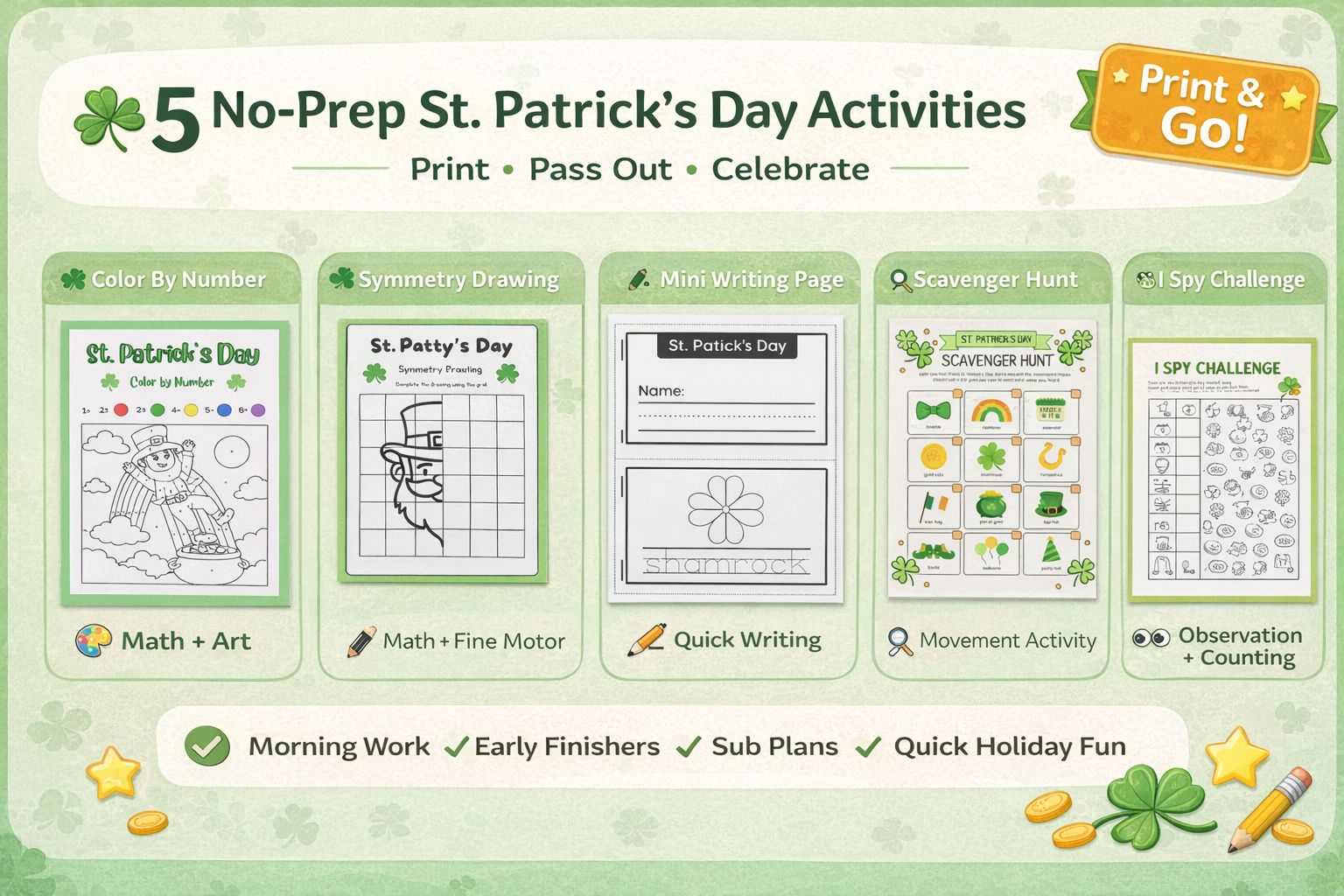
Need some last minute ideas for Saint Patrick’s Day? These 5 activity sheets are perfect for keeping your K-2 students engaged while reinforcing essential fine motor and cognitive skills. Here is a breakdown of each activity to help you plan your centers:
This activity challenges students to complete the mirror image of a leprechaun’s face using a grid system for guidance. It’s an excellent way to reinforce spatial awareness and geometry concepts while helping students practice steady hand-eye coordination.
Perfect for getting those "wiggles" out, this visual checklist asks students to find holiday-themed items like gold coins, rainbows, and shamrocks around the classroom. It encourages visual discrimination and vocabulary building as they check off each festive icon they discover.
This classic worksheet features a leprechaun sliding down a rainbow into a pot of gold, with a simple key for color recognition. It’s a fantastic "quiet time" activity that helps younger learners practice number identification and following multi-step directions.
This literacy-focused workbook includes space for students to write their names and trace holiday-themed words like "shamrock." It’s a great addition to your writing centers to help students refine their letter formation and build seasonal vocabulary.
🕵🏻♀️ "I Spy" Counting Game
In this math-based activity, students must search through a crowded field of icons to find and count specific St. Patrick’s Day symbols. It’s an engaging way to practice one-to-one correspondence and data recording as they write the final totals in the sidebar.
📺 Teaching with Teachflix Junior
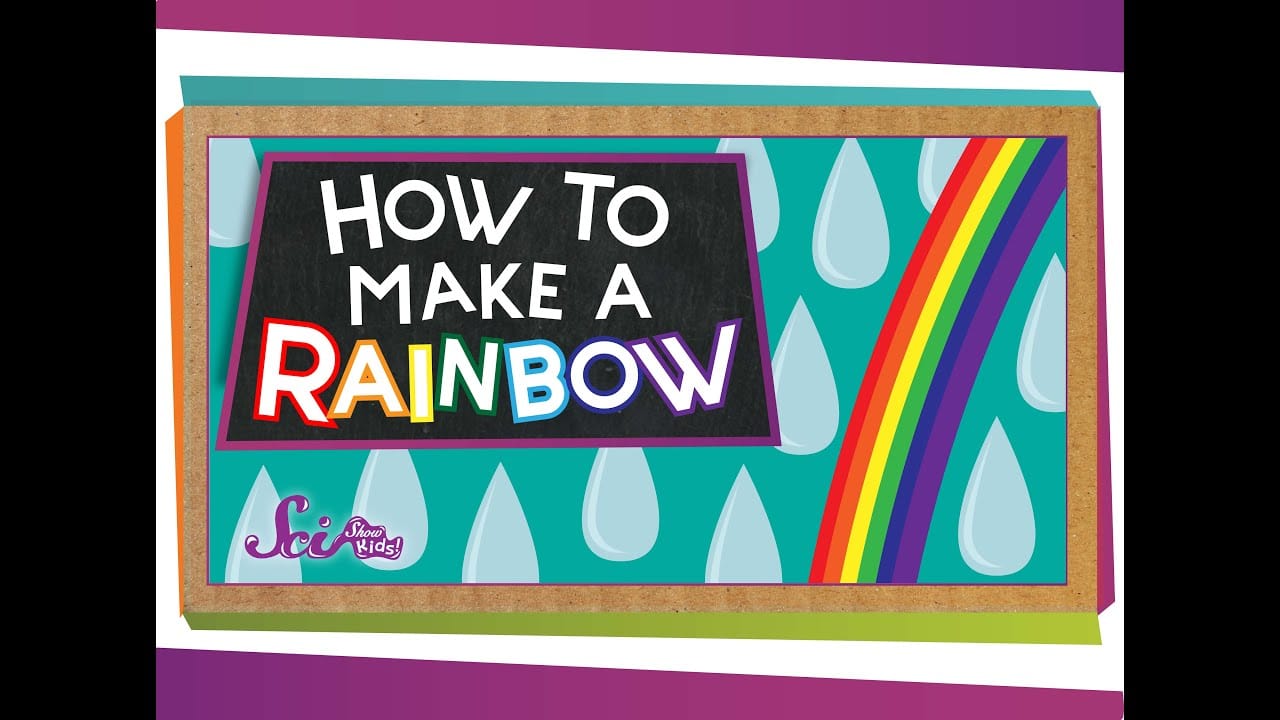
🌈 How to Make a Rainbow
🎥 Video Link: How to Make a Rainbow
This video from SciShow Kids shows students how to make a simple rainbow indoors using sunlight, a glass of water, and a piece of paper. As students observe the rainbow appear, they learn that sunlight actually contains many colors that can be separated when light bends through water. The video also explains how this same process creates rainbows outside after it rains.
Key Points from the Video
You can make a rainbow using a clear glass, water, white paper, and sunlight.
Place the paper in sunlight and set the glass of water on top, adjusting it until a rainbow appears.
Sunlight contains many colors mixed together (red, orange, yellow, green, blue, violet).
When light moves from air into water, it bends (refraction) and separates into colors.
Outdoor rainbows happen when sunlight passes through many tiny water droplets in the air.
To see a rainbow outside, you need sunlight, water in the air, and the sun behind you.
🌈 Make your own rainbows!
This is a classic for a reason! Arrange six clear cups in a circle, filling every other cup with water and primary-colored food coloring (red, yellow, blue). Place folded paper towel "bridges" between the cups and watch as capillary action pulls the water up, mixing secondary colors (orange, green, and purple) in the empty cups overnight.
For a quick "wow" moment, fill a shallow baking pan with water and lean a small mirror against the inside edge at an angle. Direct a flashlight (or bright sunlight) onto the submerged part of the mirror and hold a piece of white cardstock above it to "catch" the reflection. This is a great way to visually demonstrate refraction as the water bends the light into a vibrant spectrum.
Line the edge of a white plate with Skittles in rainbow order and pour just enough warm water to cover the bottom. Within seconds, the sugar and food dye dissolve and move toward the center, creating a stunning, non-mixing rainbow wheel. This experiment is perfect for practicing observation and prediction skills during your morning meeting.
🤭 Giggle of the Week
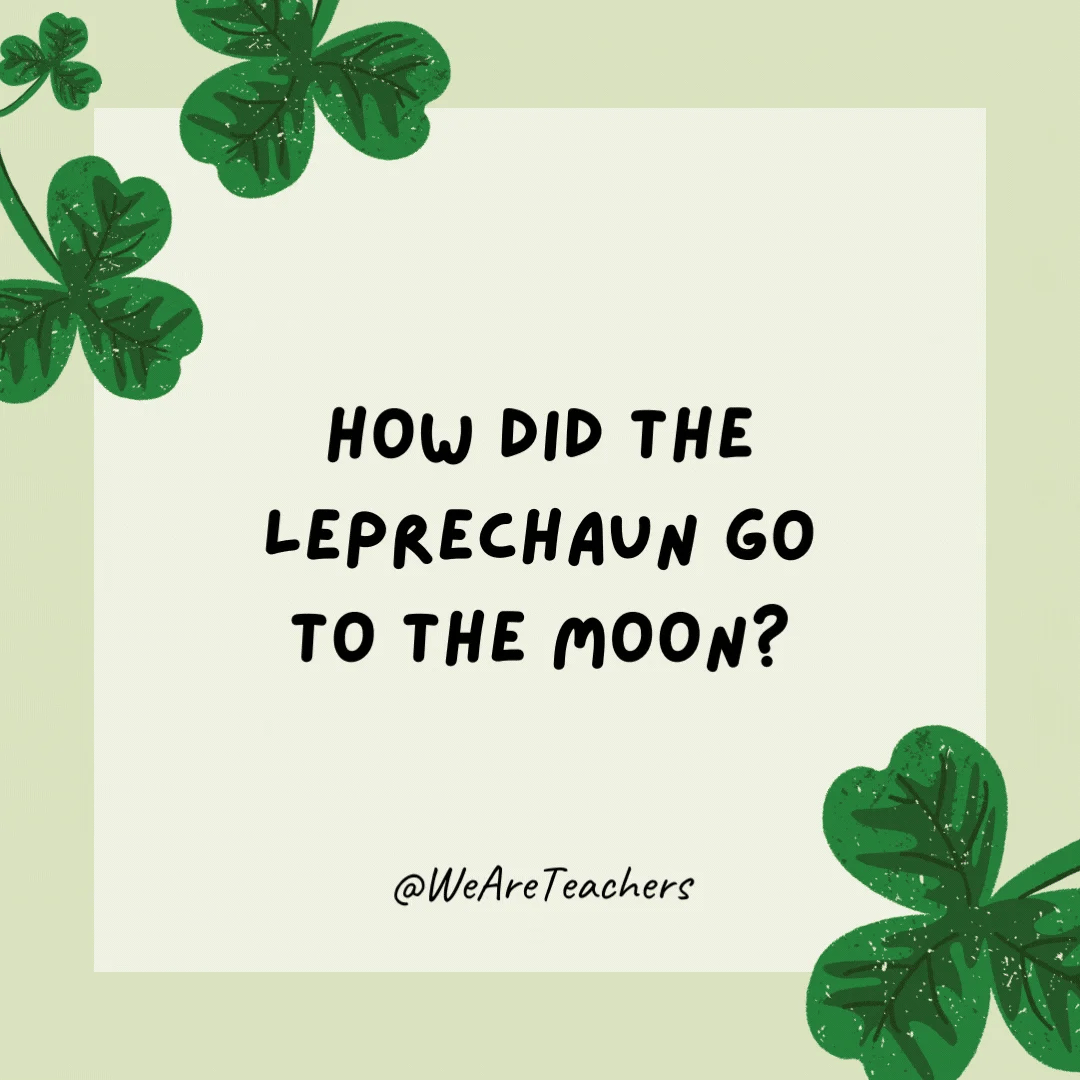
🍀🚀 In a Sham-rocket!
h/t to WeAreTeachers